Chapter 5
At nine-forty-one, the first sound arrived.
Not a siren. Sirens belonged to a category of response that was local and procedural and slow. This was something else. Something lower than a siren, coming from a direction that was not the street. The frequency of it reached the shed before the sound did, a vibration in the air that traveled through the concrete under me and the metal shelving at my back and the wooden door in front of me, and then the sound came, rotor wash, cutting low and fast over the tree line south of the estate.
Then a second.
Then silence, briefly, before the rotors changed pitch over the grounds.
In the study, Arthur's glass stopped moving. I could not hear this. I know it because I know what a man like Arthur Sterling does when the assumptions that his world is built on begin producing information that conflicts with itself, which is that he goes still, and the glass goes still with him.
Julian's laughter stopped.
The lights inside the house shifted as headlights swept across the back wall from the front driveway, multiple vehicles, moving with the coordinated pace of people who have approached residential properties in the dark many times before and understand that the approach itself is a form of communication.
Then the front doors opened.
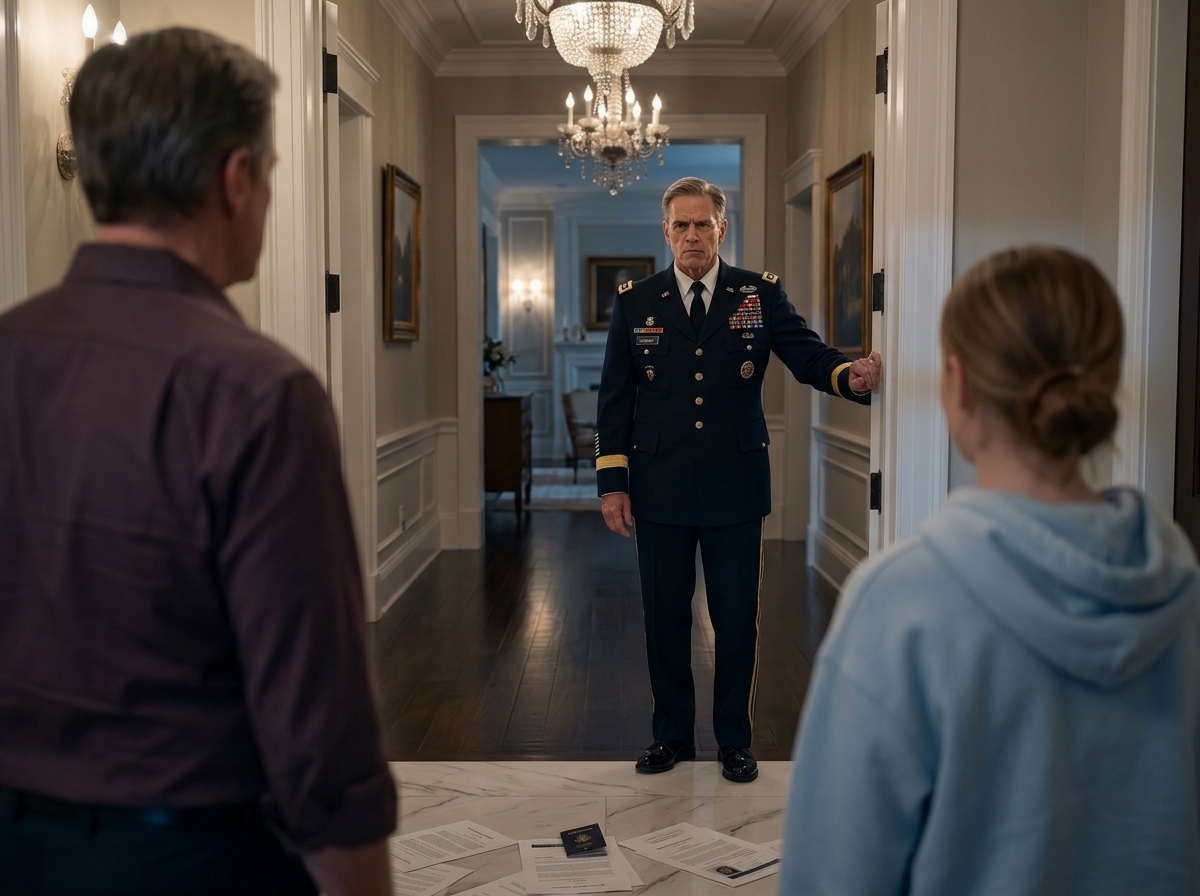
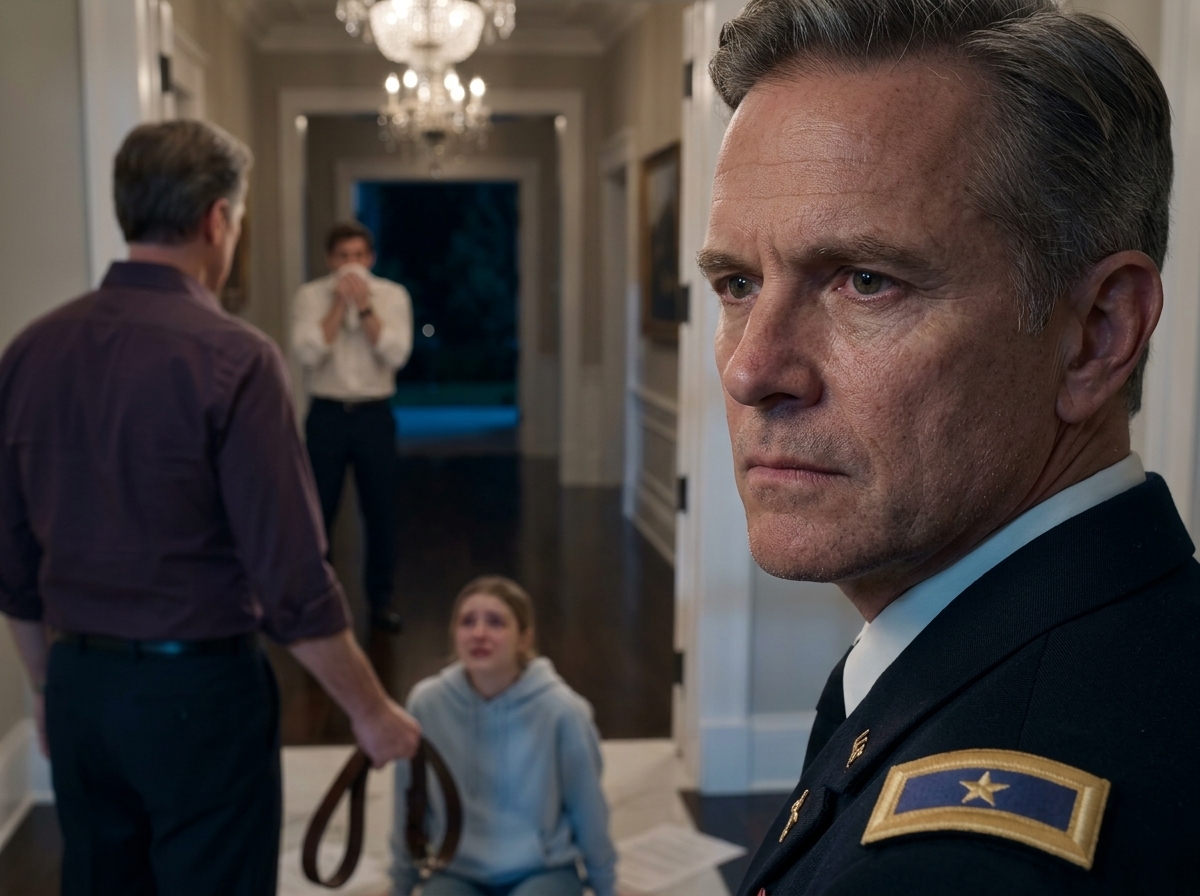
My father crossed the threshold of the Sterling Estate in his service uniform, flanked by two officers, and he moved through the entryway with the specific unhurried certainty of someone who has spent three decades making decisions in environments where the cost of hesitation was not recoverable. He walked into the hallway where the chandelier was still lit and the scattered papers from earlier were still on the floor and the umbrella stand was still in its corner, and he looked at Arthur Sterling standing at the entrance to the study with his whiskey glass and his courthouse title and three years of unchallenged authority in this house, and my father said four words.
"Step away from my daughter."
Arthur Sterling looked at the uniform. He looked at the two officers behind my father. He looked at the vehicles visible through the front windows and he heard the rotors still running somewhere above the south tree line, and I watched his face from the doorway because they had let me out of the shed two minutes earlier and I had walked around the house in the dark and come through the back, and I was standing in the hallway when he turned.
May you like

He turned because one of the officers said his name, and he turned expecting something manageable, a knock on a door that could be explained and documented and filed and responded to through channels he controlled.
He turned and found me.