Chapter 1
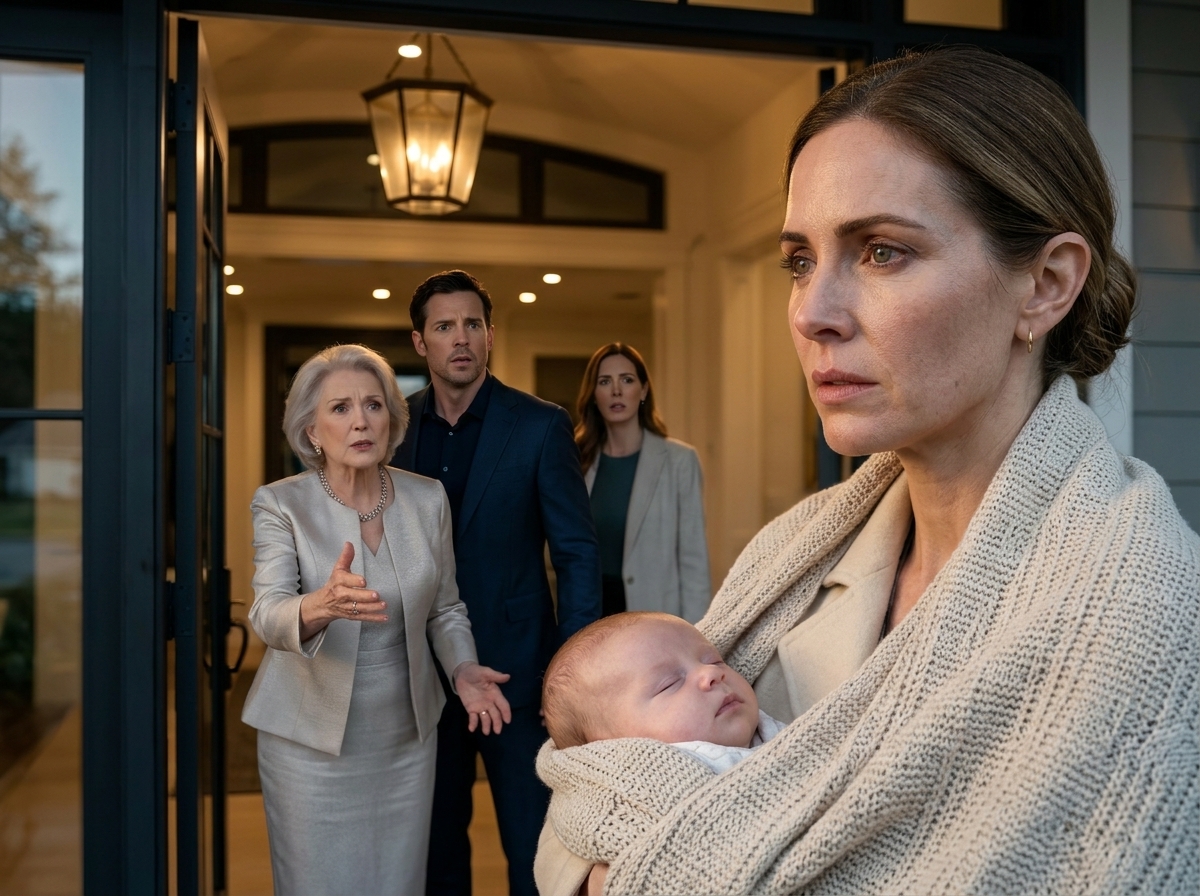
My name is Tessa Marlowe, and the night my husband locked me out of my own house, I was three days postpartum and standing in the rain with my daughter sleeping against my chest.
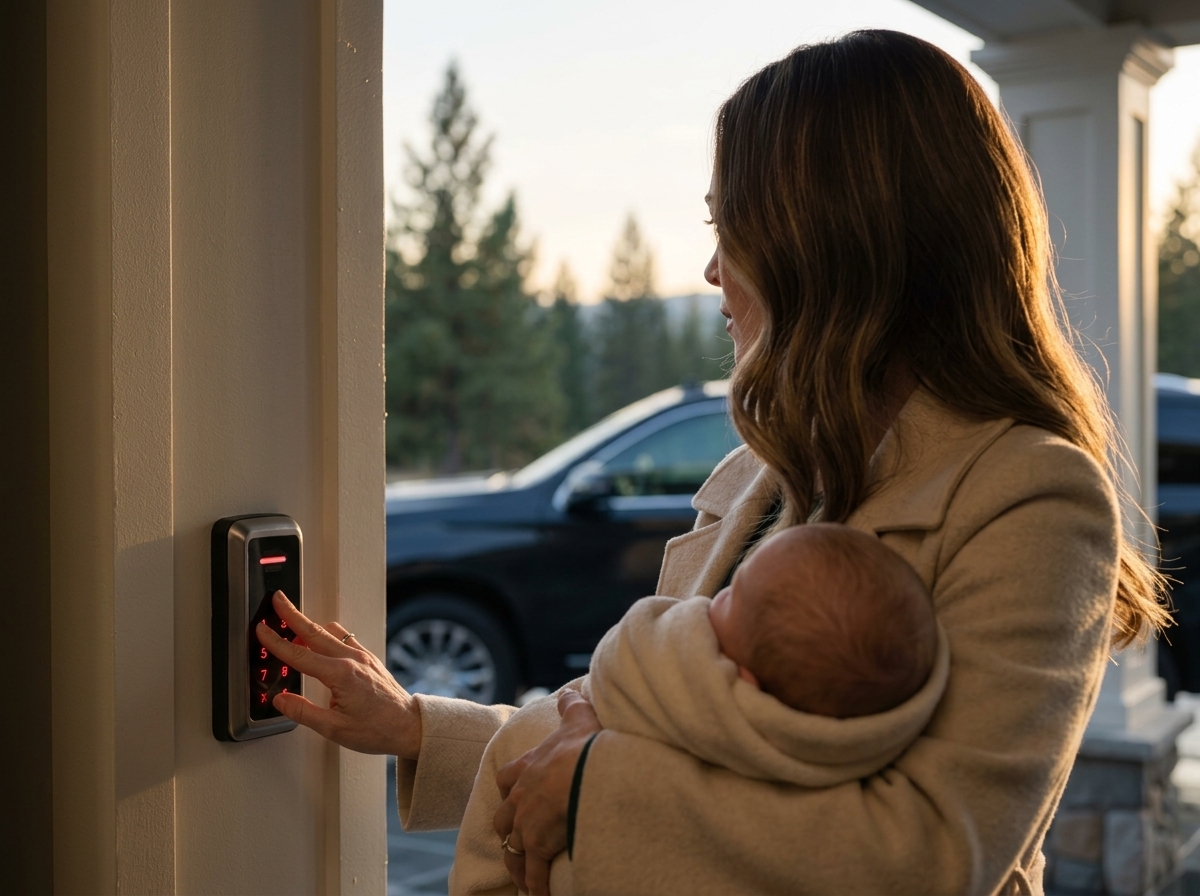
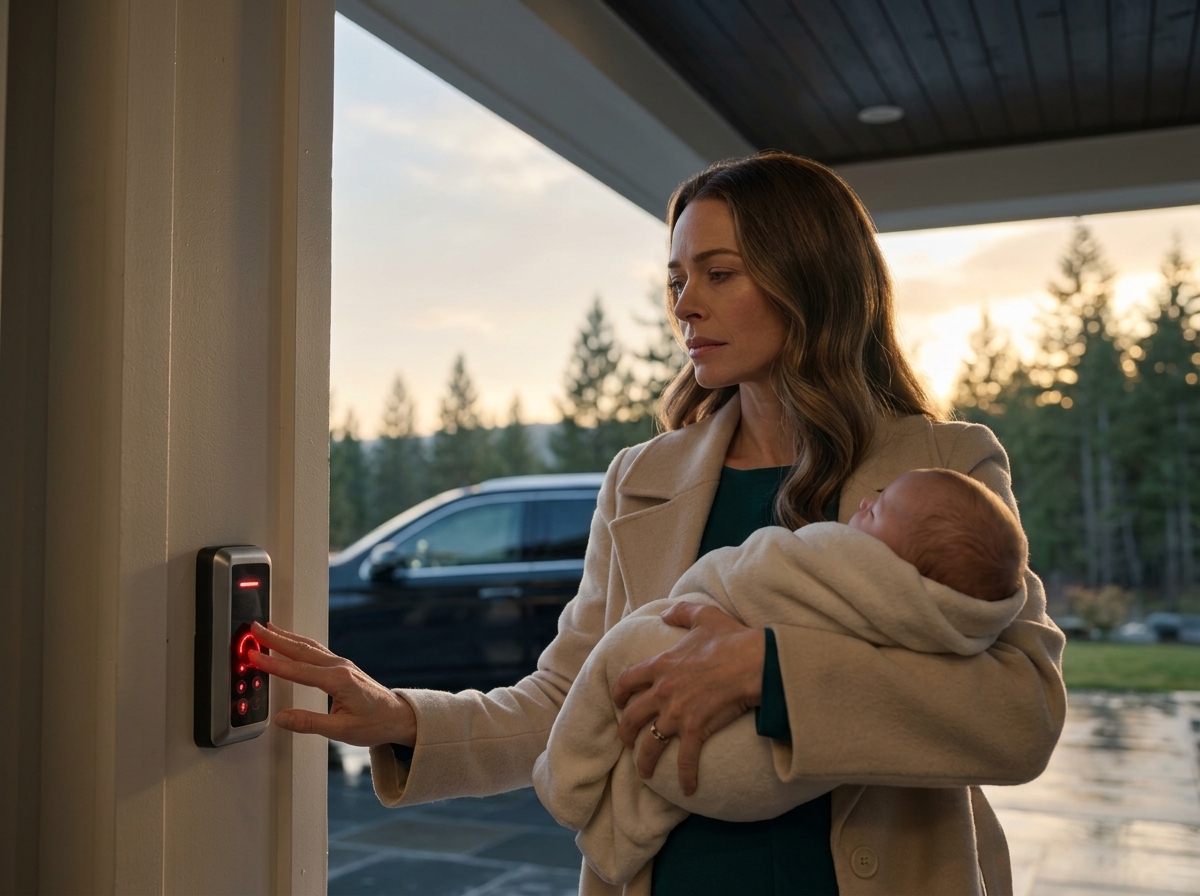
I want to start with the rain because it matters. Not for atmosphere, not for effect, but because I had driven forty minutes from the hospital with Ivy in her car seat and the diaper bag and the little pink blanket my sister had given us at the shower, and I had pulled into the driveway of the house I had bought seven years before I ever met Brent Holloway, and I had walked to the front door in the dark, and I had entered the code I had been entering for eleven years, and the keypad had flashed red and the door had stayed closed. I stood there for a moment thinking I had mistyped it. I entered it again. Red. I entered it a third time, because three is the number you try before you understand that the code has not changed by accident.
The rain came while I was standing there the third time.
The house behind the glass doors was lit from inside the way it always was in the evenings, warm and yellow and specific, the light I had chosen for every room because I wanted the house to feel like arriving somewhere rather than simply being somewhere. I could see the entryway through the glass, the tile I had picked out on a trip to Portugal before Ivy existed, before Brent existed, when I was thirty-one years old and building something entirely on my own because no one else was going to build it for me.
I had bought the house on Redwood Crest Drive with money I earned. Not inherited, not borrowed, not received as a gift from someone whose name was on a trust fund or a family account. I had built a materials consulting firm from a one-room office in Denver over nine years, and the house was what that looked like when the years added up, five thousand square feet of stone and glass on two acres in the foothills with a view of the Flatirons that made people go quiet when they stood at the kitchen window for the first time. I had closed on it at thirty-four, paid off the mortgage at thirty-nine, and never added anyone else's name to the title because my attorney Jennifer Cho had advised me not to and because some part of me had always understood, even before I could articulate it, that the house was the one thing I had made entirely by myself and I was not ready to share that particular authorship.
I had met Brent two years after I bought it. He was charming in the way of men who understand that charm is a tool, and he was attentive in the way that attentiveness can look like love until you understand that it was actually inventory, and I had married him at forty-one because I was tired of being careful and because I thought I understood who he was by then. I did not understand who he was by then. I understood who he was over the four years that followed, slowly and then all at once, the way understandings like that tend to arrive.
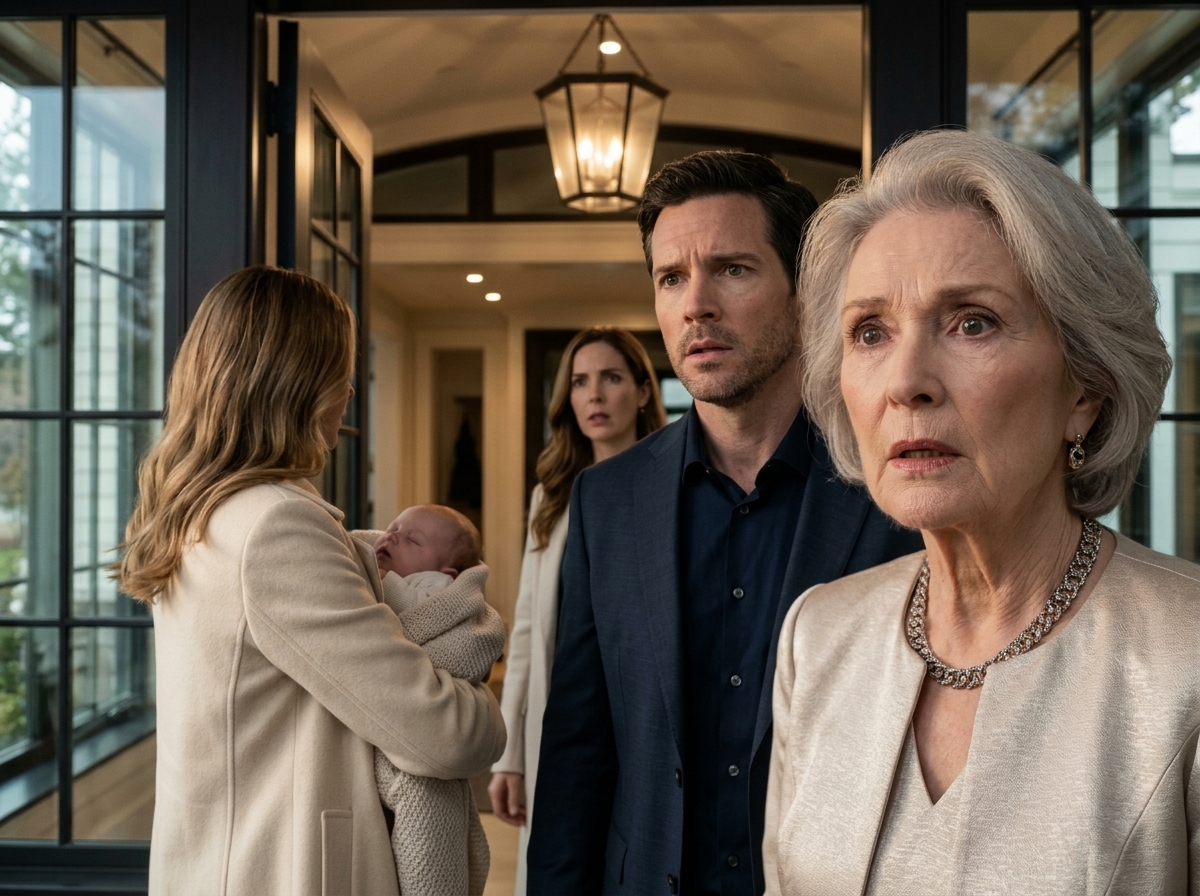
His mother, Diane, had never pretended to see the house as mine. She hosted holiday dinners in it as though she had designed the menu and owned the table, which she had not and did not. She gave Brent's sister Karen a key without asking me, and Karen had filled the staircase with framed photographs of the Holloway family that had appeared one afternoon while I was traveling for work and that I had not removed because removing them felt like a confrontation I was not ready to have. Brent introduced the house to his clients as our estate with the specific emphasis of a man who has decided that proximity to a thing constitutes a claim on it. I had watched all of it for four years and said less than I should have because I was trying to make a marriage work and because I had convinced myself that the house was just a house and what mattered was the life inside it.
May you like

The life inside it had not become what I had hoped.
The pregnancy had been planned and wanted and I do not want to suggest otherwise. Ivy was wanted completely, from the first conversation about her through every week of the forty that followed. What had not been planned was the specific character Brent revealed in the last trimester, the conversations about the house that began arriving in different forms, casual at first, then less casual. His name on the title. A family trust. Estate planning that treated the house as a shared asset when it had never been a shared asset. He had a way of presenting these suggestions as practicality, as forward thinking, as the responsible thing to do now that there was a child to consider, and I had deflected each one without ever saying the direct thing, which was that the house was mine and was going to remain mine and his name was not going on the title because the prenuptial agreement we had signed was still fully enforceable and I had signed it for reasons that were becoming clearer to me by the month.