Chapter 1
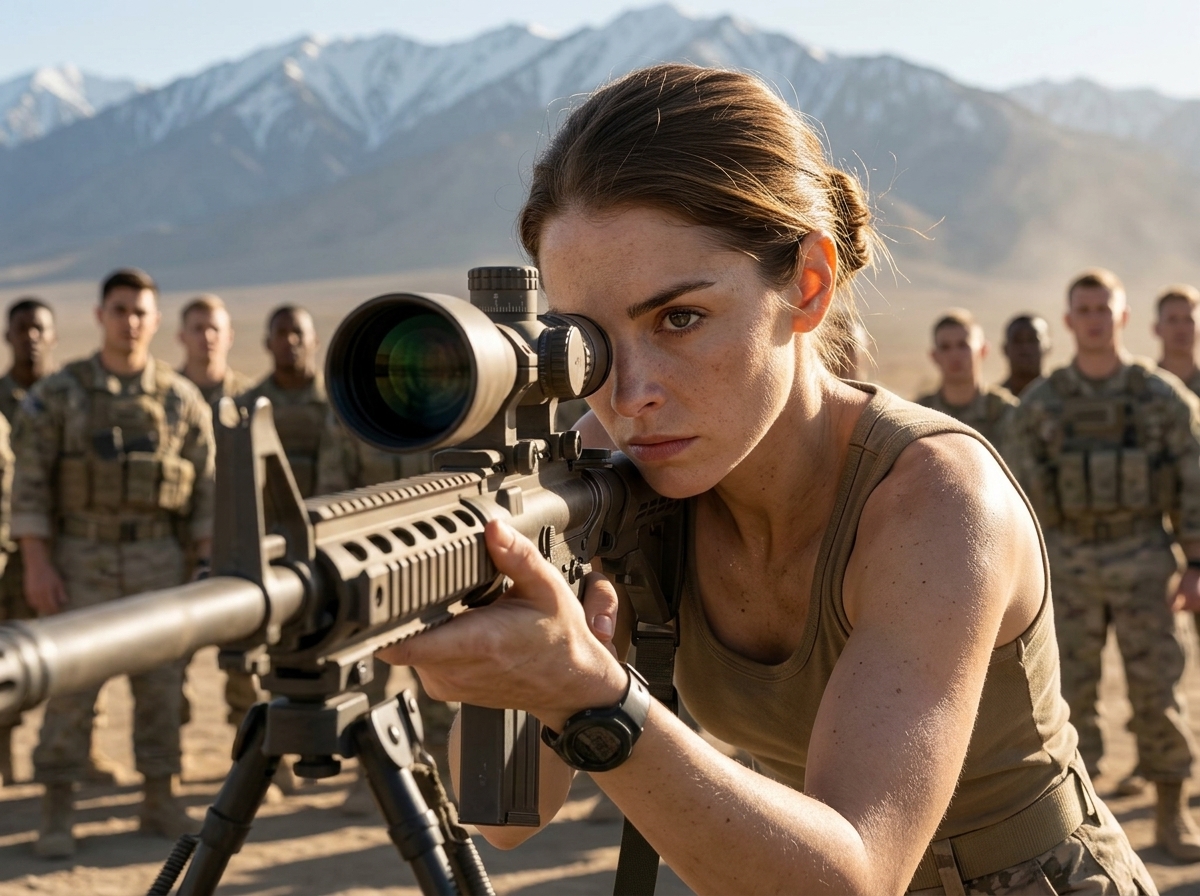
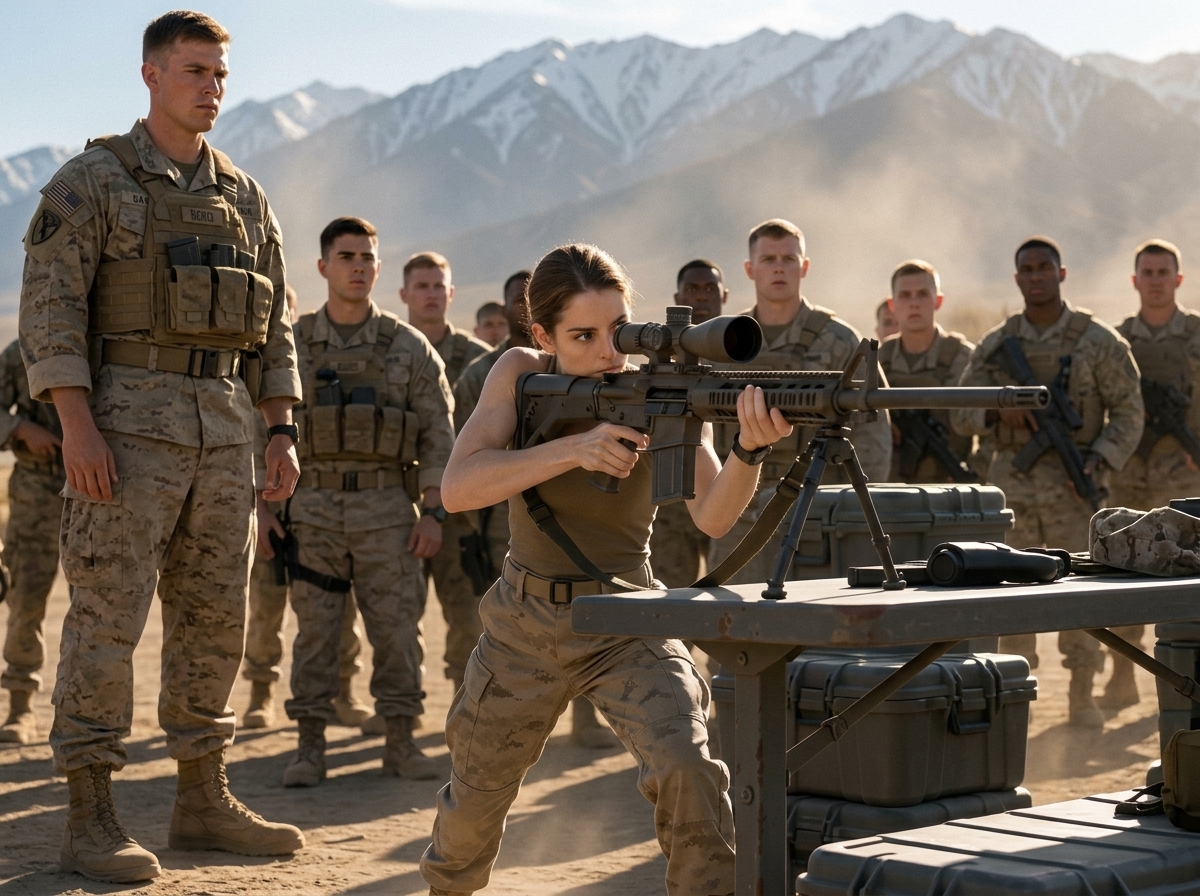
The range alarm screamed before the last Marine even cleared his chamber.
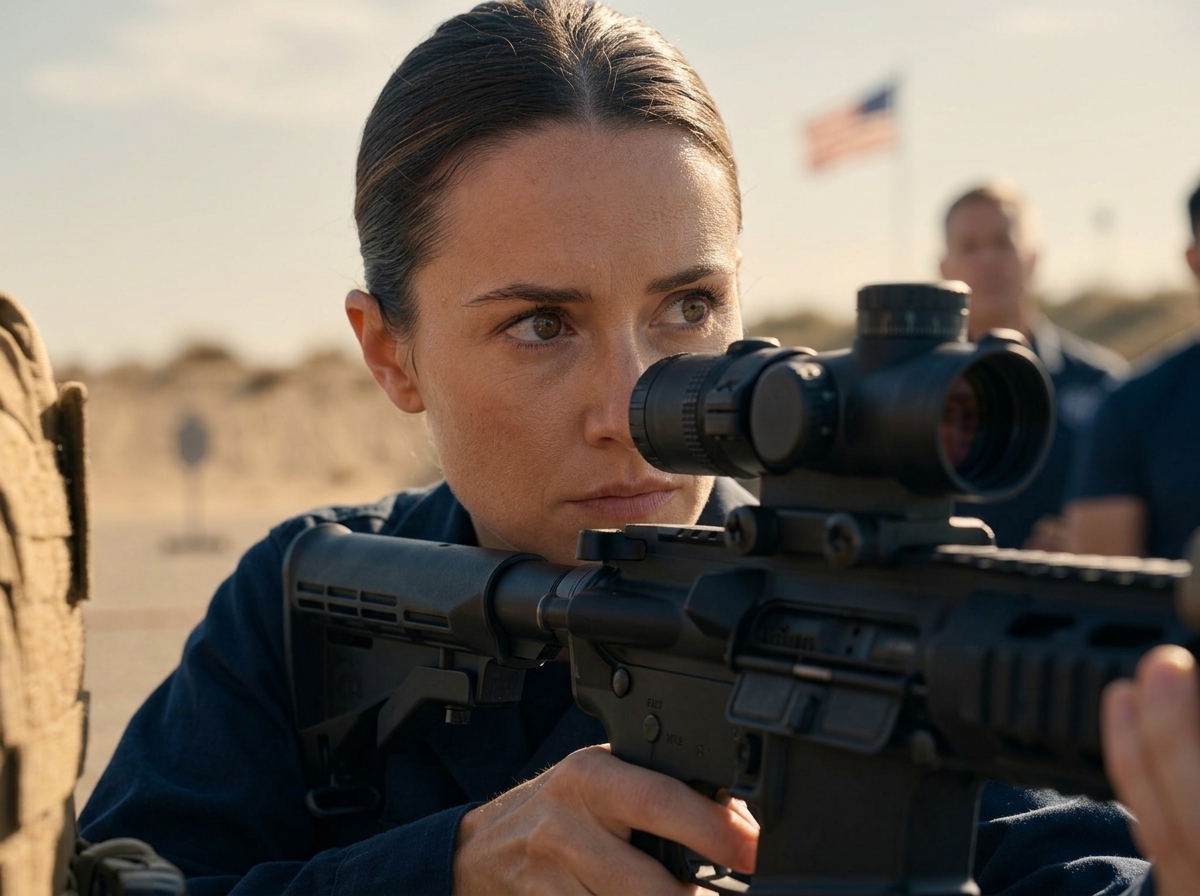
Red lights swept across the observation tower at Hawthorne Ridge, and the electronic board at the far end of the long-distance lanes updated with the number that ended careers and started rumors: FAILED: 73/100. Dust rolled over the shooting lanes in the afternoon light. Behind the observation glass, SEALs, Rangers, Marine Raiders, and a row of visiting command staff stood in the specific silence of people who have just watched something expensive fail in public.
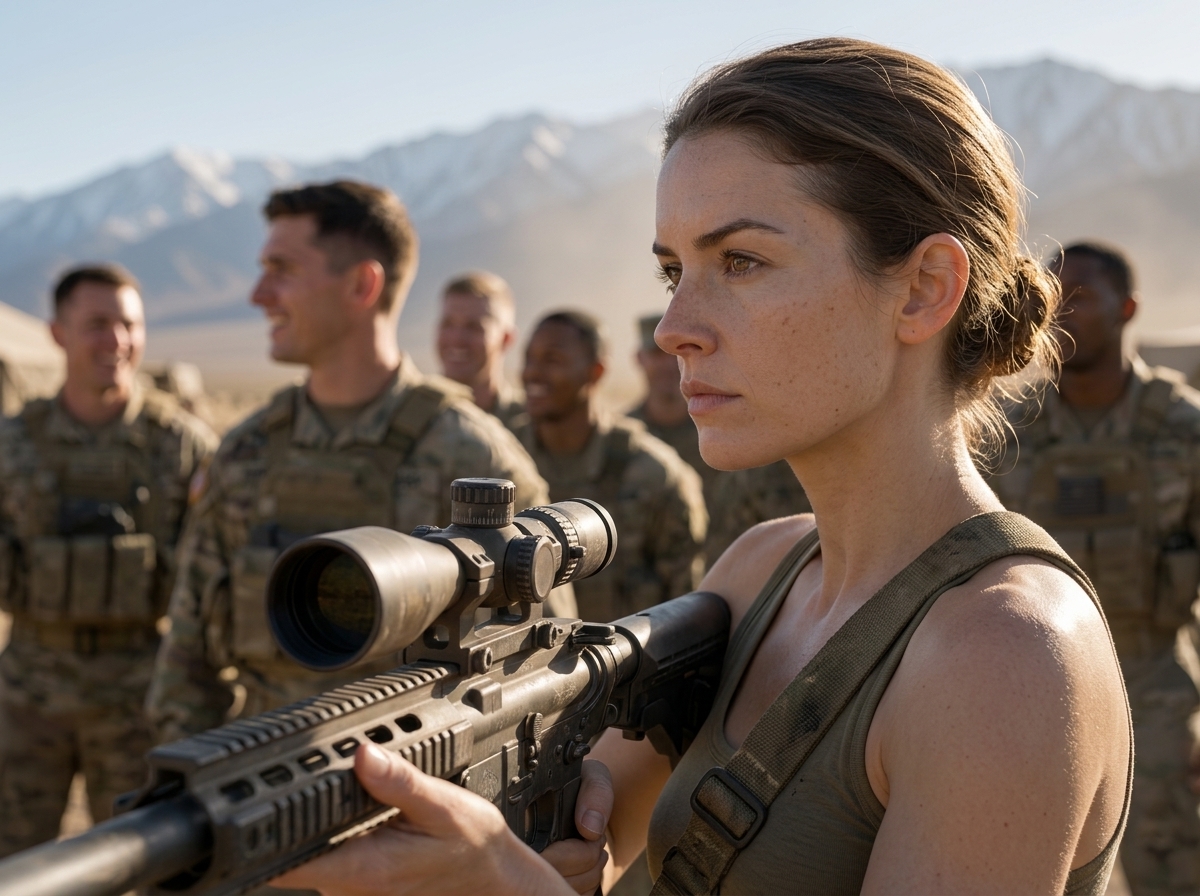
My name is Leah Mercer. I was forty-one years old, standing beside a stack of ammunition crates with a clipboard against my chest, wearing a faded tan logistics jacket, old boots that had been resoled twice, and a badge that said Range Support Coordinator. For the six months I had been at Hawthorne Ridge, most of the men who crossed paths with me knew me as the quiet woman who fixed scheduling conflicts, tracked manifest errors, and made sure the coffee situation during night exercises did not become a morale incident. I checked inventory. I corrected data. I stayed in the background the way I had learned to stay in the background, which was completely, and on purpose, and for reasons I did not explain to anyone.
That was how I preferred it.
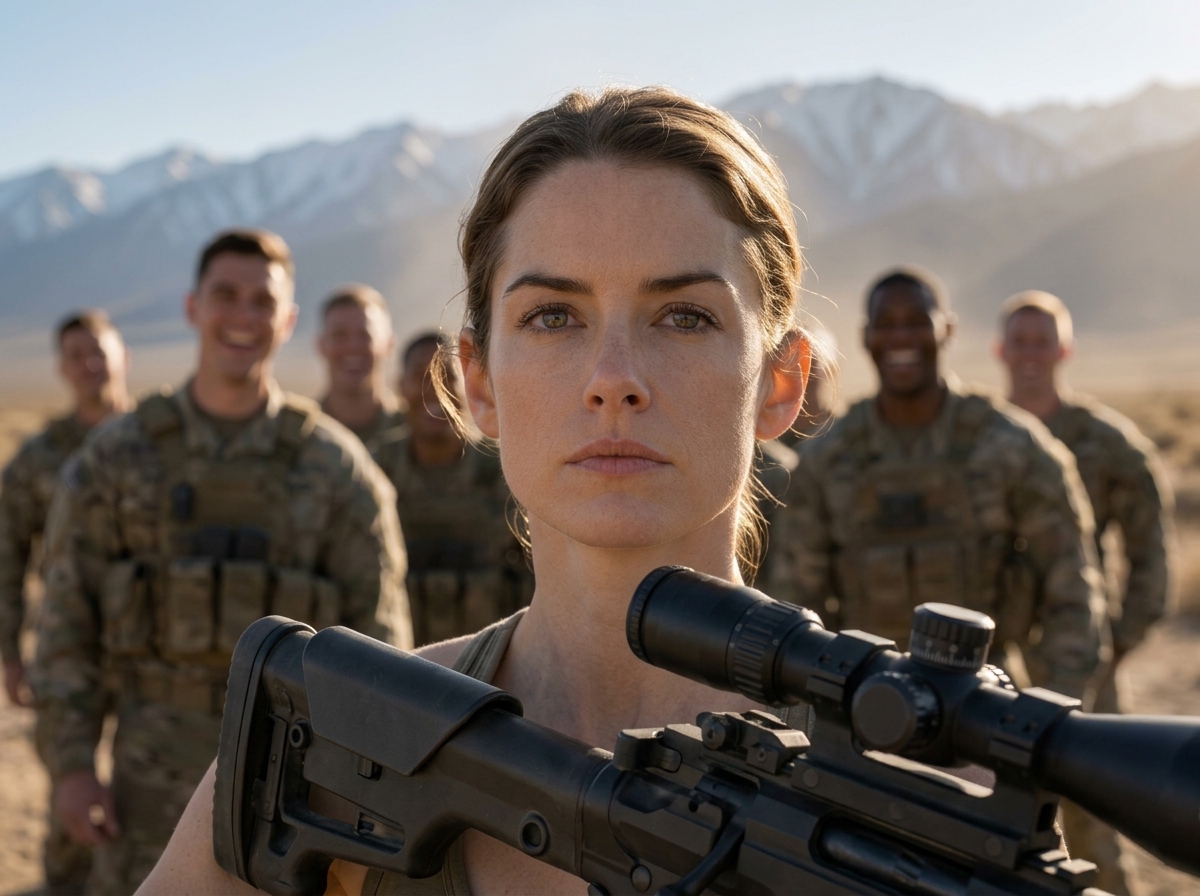
Major Colt Harlan did not prefer it. He preferred everything visible, everything loud, everything organized around the principle that authority was most effectively expressed through the discomfort of whoever was nearest when things went wrong. He was built like the Army had designed him as a demonstration model — broad through the chest and shoulders, with the kind of jaw that looks like it was assembled specifically to support a command voice. He had just watched his top shooters fail a record trial in front of visiting staff, and he needed a direction for what that failure had made him feel, and he found it quickly, which was the talent that had kept him employed and the flaw that was about to define the afternoon.
He turned toward me.
"This is what happens when support staff crowd the line," he said, loud enough for the observation room to receive it clearly. "Maybe our librarian here logged the wrong wind data."
A few operators laughed. Not because it was accurate. Because rank can make cowards look like team members.
I looked at the board. The numbers were there, clean and factual. "The data was correct."
Harlan stepped closer. "Say that again."
"The wind changed twice after your first relay. Your shooters corrected late." I kept my voice at the register of someone stating something that is simply true and does not require additional decoration. "The data wasn't the problem."
The Marine captain two positions to Harlan's left shifted his weight. He had run the same numbers. He knew what I had just said was accurate. He did not say so out loud, which told me everything I needed to know about the specific culture that had been built at Hawthorne Ridge over the preceding two years.
Harlan reached out and snatched the clipboard from my hands, then drove it back against my chest with enough force that the metal clip bit through the fabric of my jacket and sparked pain under my collarbone. It was not a punch. It was not a throw. It was the precise amount of force that falls below the threshold of what anyone in the room would write down afterward, delivered by a man who had calculated that threshold accurately.
He leaned close enough for me to smell coffee and whatever he had been using to perform confidence for the past four hours.
"You move boxes," he said. "I train killers."
"Then train them to listen," I said.
The room closed around that sentence the way rooms close around things that have been said too accurately to argue with.
Harlan's hand found my upper arm and turned me toward the spectators with the deliberate ease of a man demonstrating ownership of a space to everyone watching it. It was not a grip that would leave a mark. It was the kind of contact that communicates its message entirely through its existence.
"Here she is," he announced to the room, to the visitors behind the glass, to the operators who had stopped pretending to look elsewhere. "The woman who thinks a spreadsheet makes her a marksman."
He released my arm.
I looked at the place where his fingers had been for one moment, then back at him.
May you like

A young Ranger near the equipment rack — I had seen him on the range three times that week, always early, always working something through in his form — spoke quietly into the air between us. "Maybe let her try, sir."
The room stirred the way rooms stir when a small stone hits a still surface.