Chapter 1
The Crucible was built to break people, and it was very good at its job.
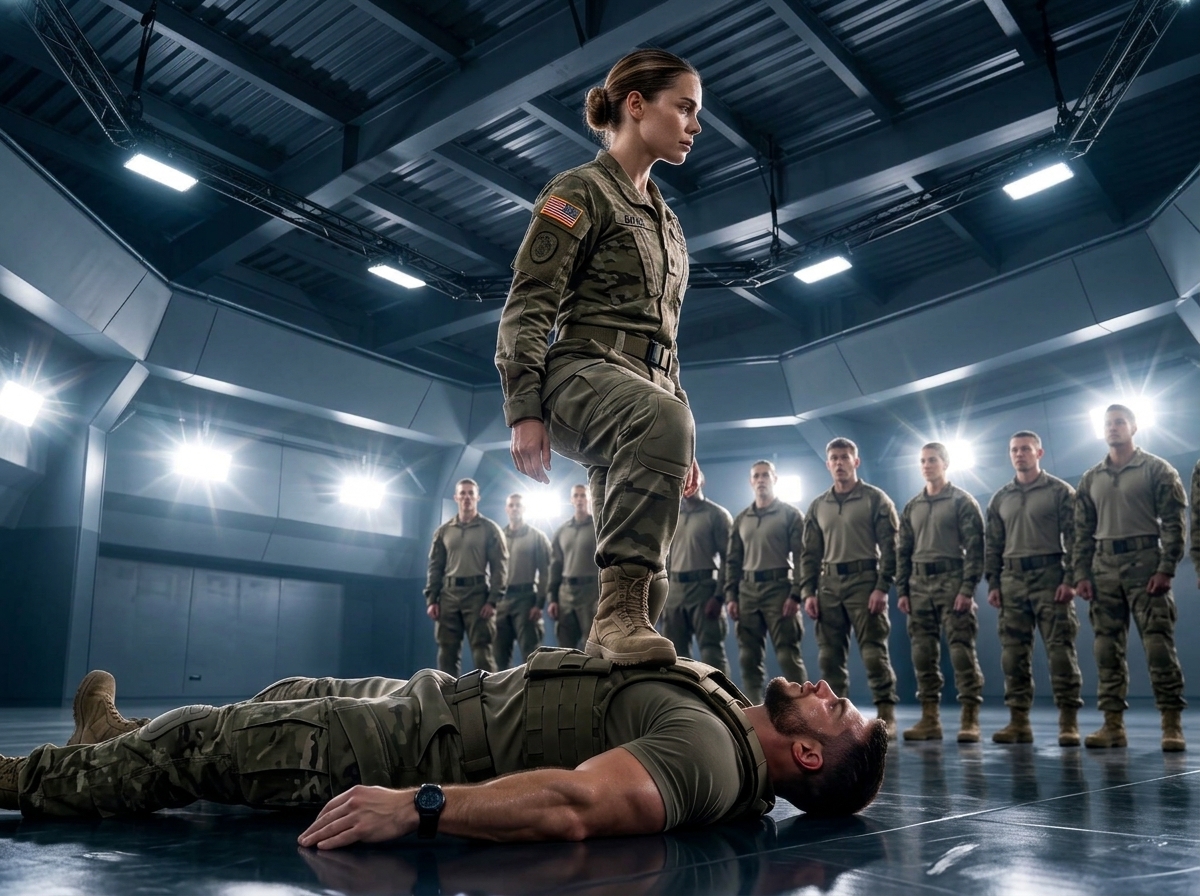
The facility sat inside a mountain in western Virginia that did not appear on public maps, accessed through a service road that required three separate credential checks before the gate opened. Inside, the main arena smelled like rubber mat, industrial coolant, and the particular sweat that accumulates in spaces where people push themselves past the point where they would have stopped on their own. The ceilings were high, the walls were reinforced, and the sensor grid that lined every surface of the primary chamber could track thirty-two simultaneous data points from a moving body and render them in real time on the wall displays. It was one of the most sophisticated training environments in the country.
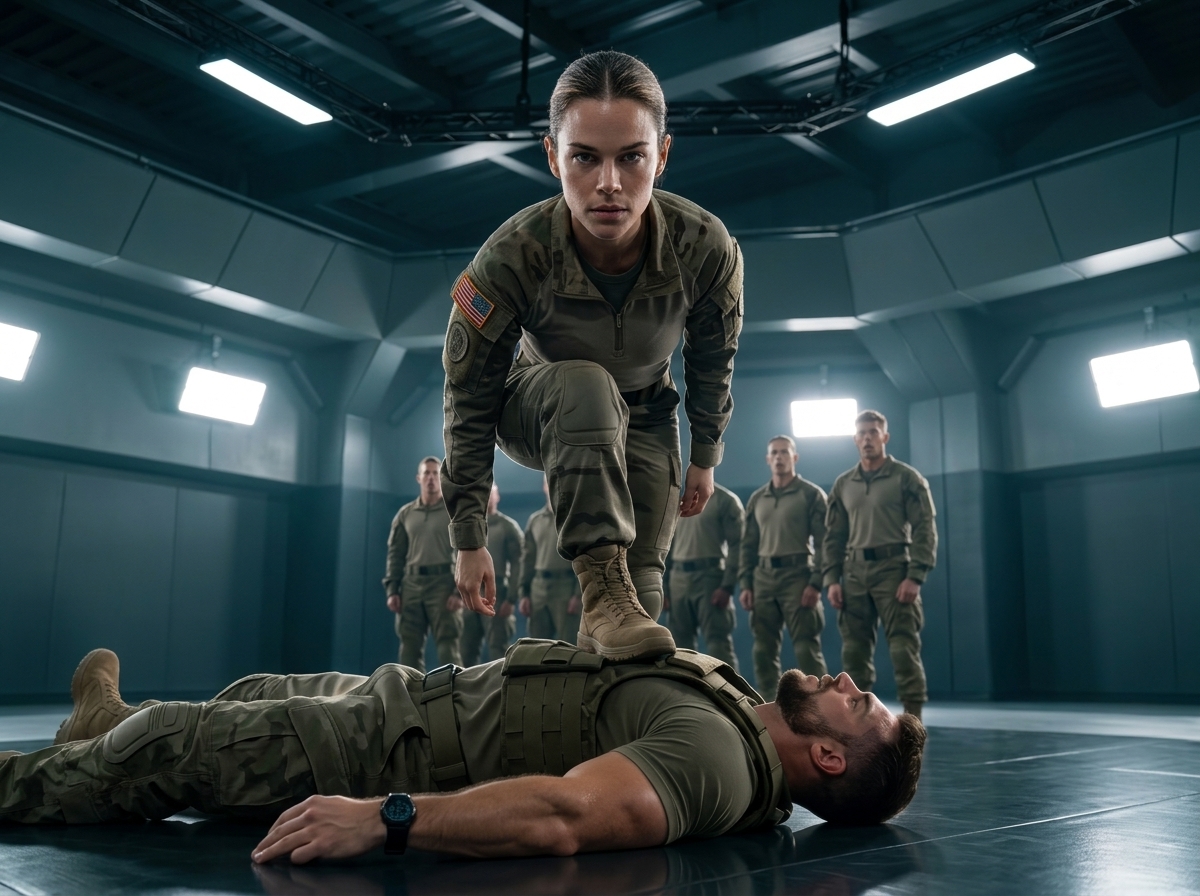
Someone had miswired the left bank of the grid three days earlier, and I was lying on my back under the console trying to find the fault in the calibration sequence when Captain Brody Kane slammed his training partner into the mat hard enough to make the entire sensor wall flash red.
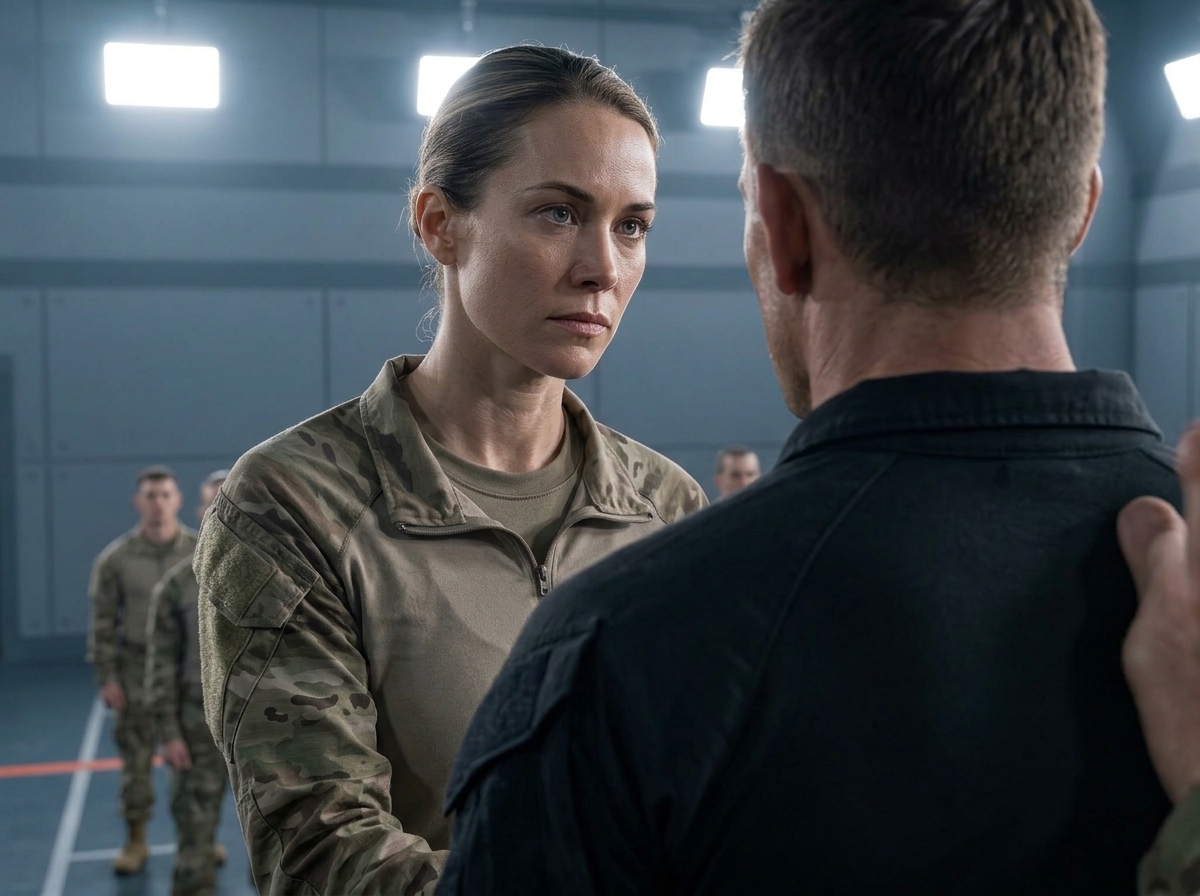
My name is Mara Ellison. I was forty-four years old, employed at the Crucible as a civilian systems technician, which was the designation on my badge and the designation on my work orders and the designation that most of the people in this building used when they thought about me, which was not often. Loose gray coveralls. Hair pinned back. Soft voice, when I used it. No rank on my chest. I had been at the Crucible for seven months and I had calibrated every sensor in the building twice and I had fixed four separate integration failures in the chamber systems and I had never once, in seven months, given anyone in this facility a reason to look at me twice.
That was the point.
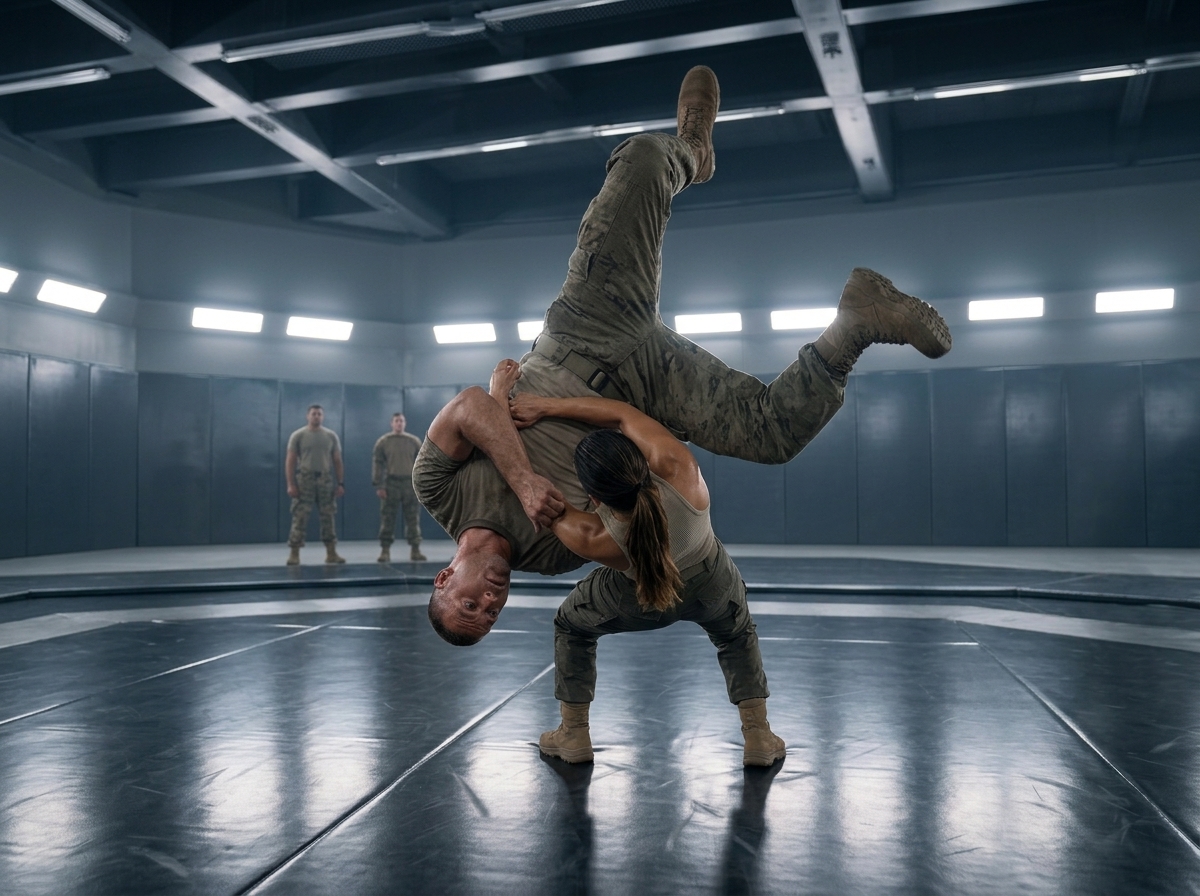
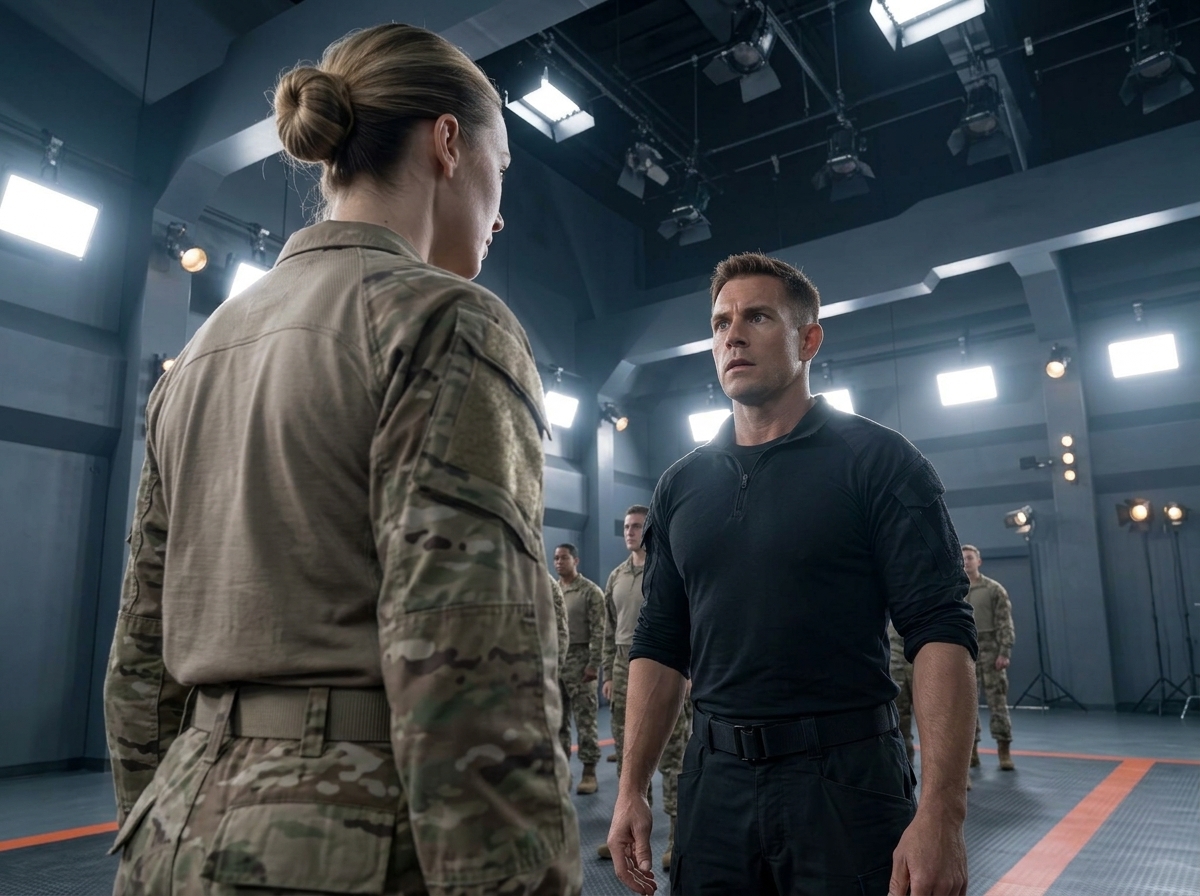
Kane was six foot four, built like the Army had designed him as a demonstration model, with a shaved head and scarred knuckles and the specific confidence of a man who had spent his entire career in rooms that organized themselves around him. He commanded a pre-deployment preparation cohort — thirty trainees who were ninety days from active assignment — and he ran the cohort with the particular philosophy of a man who believed that discomfort administered publicly was the most efficient pathway to competence. He was not wrong about everything. He was wrong about enough.
He had brought the cohort to the arena for a live demonstration, and the demonstration was good in the way that demonstrations from physically gifted people with poor technical understanding are good — impressive to audiences who don't know what they're watching, recognizable as flawed to audiences who do. I could see from my position under the console that his left hip opened three degrees too early before every throw. It was the kind of tell that a careful opponent could read in the second exchange and exploit in the third. He had built the tell into every trainee he had worked with this cohort, because they had been learning from watching him, and what they had been learning was a vulnerability he did not know he had.
I stood to reset the wall grid.
Kane noticed me the way men like Kane notice things that seem out of place in a room they believe belongs to them — first with mild irritation, then with the performance of that irritation for the benefit of his audience.
"Careful, librarian," he called across the arena, loud enough for thirty trainees to hear clearly. "This floor is for fighters."
A few of them laughed. The laugh that follows when someone with authority decides to make someone smaller funny for the room.
I checked the sensor readout. The left hip tell had registered on the grid as an asymmetry in weight distribution during the throw sequence. The data was right there on the display, available to anyone who understood what they were reading.
May you like



"Your left hip opens before every throw," I said.
The laughter stopped.