Chapter 3
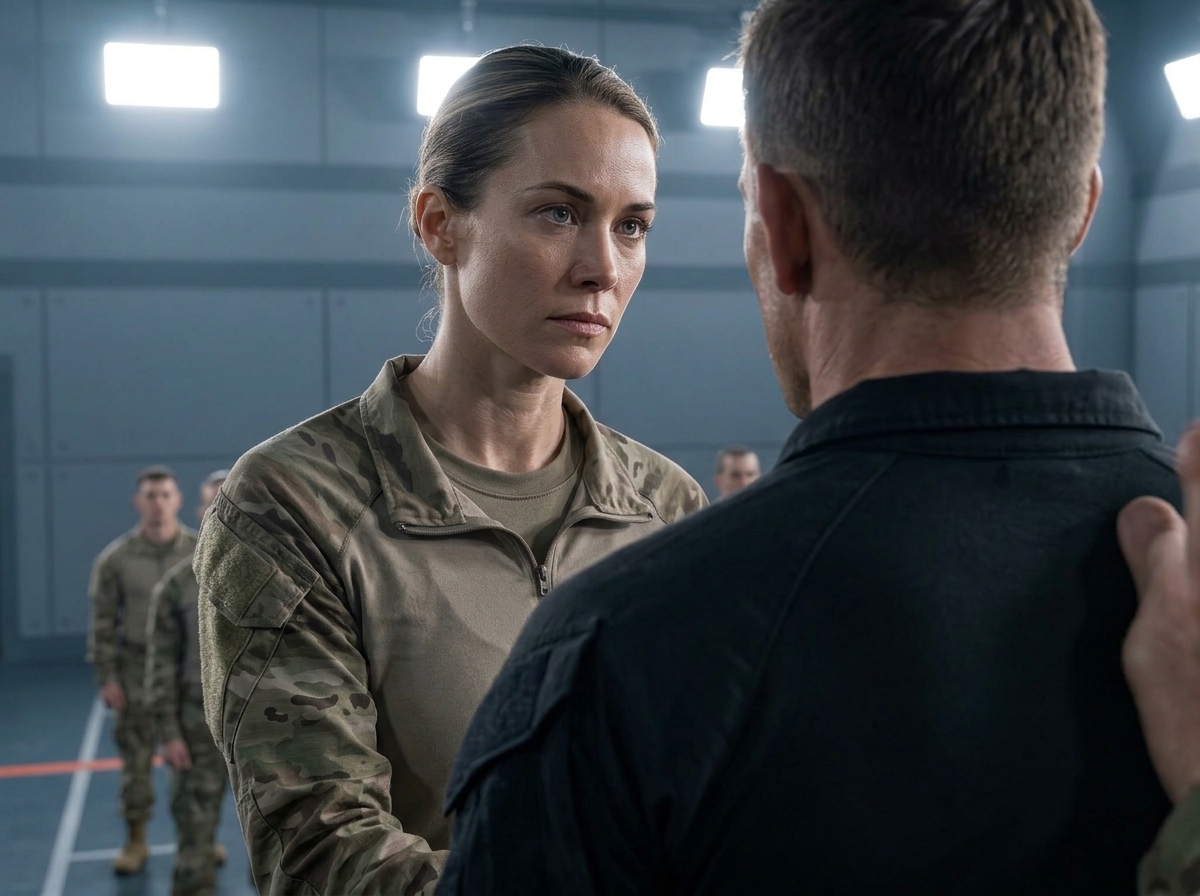
The chamber door unsealed with a pressure release that I felt in my chest. I walked in without looking back at Kane or at the trainees or at the observation deck. I walked in because the geometry of what was about to happen did not require any further setup, and unnecessary preparation is a form of hesitation, and hesitation is a tell as legible as an opening hip.
The chamber was fifteen meters across, walls lined with sensor panels, floor surface rubberized to a specific friction coefficient that I had calibrated personally three weeks earlier when the grip readings started coming in three percent high. I knew this room the way I knew every room I had spent significant time in — in its dimensions, in its angles, in the specific acoustic signature it produced when a body impacted the floor at velocity.
The first adaptive target came from my left at two seconds.
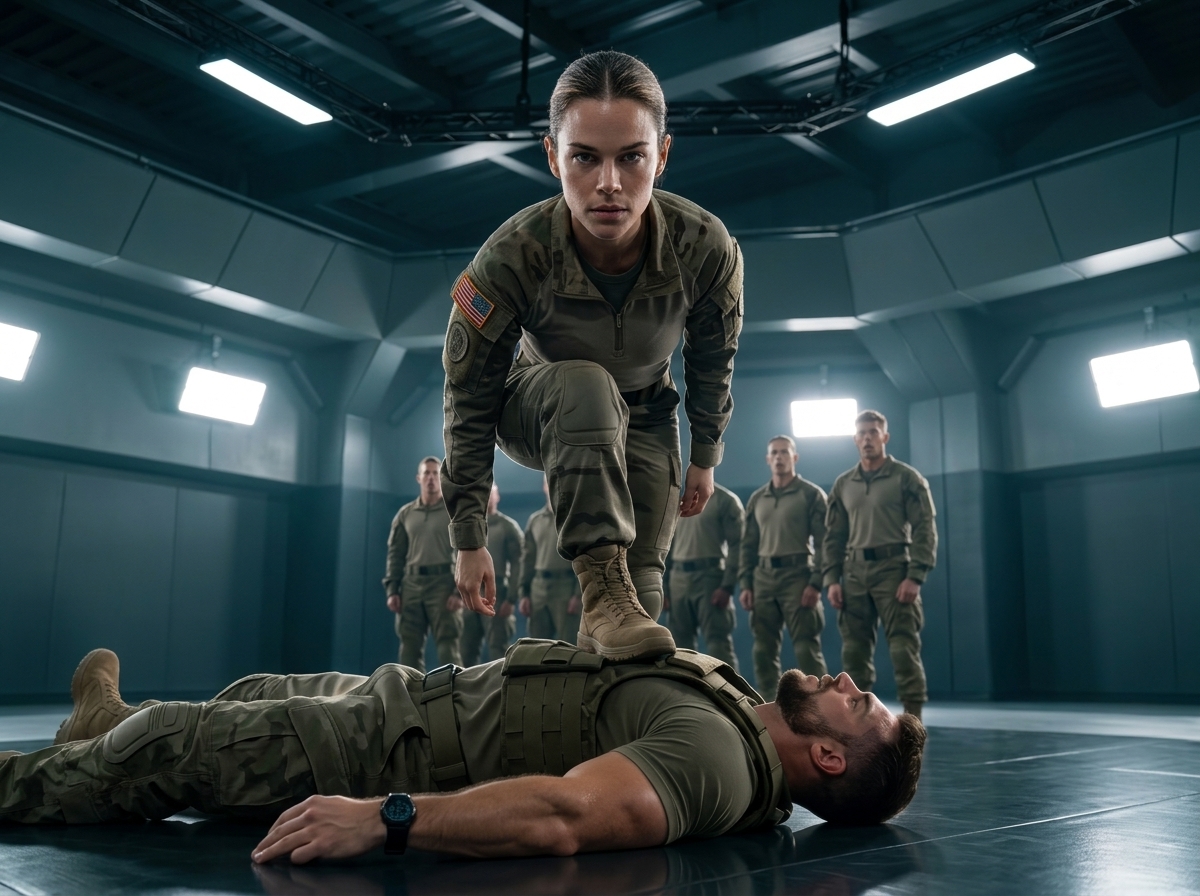
I pivoted off my planted right foot, turned my hips, and caught the incoming momentum at the point where it had committed fully and could not self-correct. My hands found the grip that the system had built into the target's design, and I redirected the force in the direction it was already traveling, adding rotation and removing the platform it needed to complete the throw. The target came over my body and hit the floor with a controlled slam that registered on the sensor panels as a clean takedown.
I stepped through the finish without stopping and planted for the second target, which came from the right.
The second one went down in the same amount of time.
The third came from behind with more speed than the first two. I heard it in the floor vibration and turned into it rather than away, which was the correct answer and also the less intuitive one, and the correct answer produced a throw that was cleaner than the first two because the speed of the incoming contact gave me more to work with rather than less.
Four went down in the space between the third and the fifth. I do not fully remember the precise sequence of four and five because at a certain point in this kind of work the conscious inventory of actions stops and the body operates from the deep practice that has made the inventory unnecessary. What I remember is that five went down and I was standing in the center of the chamber and the sensor wall was displaying the elapsed time and the room outside the chamber had gone so quiet that I could hear the ventilation system in the ceiling.
Eleven seconds.
Four seconds under Kane's record. I turned toward the chamber door.
Kane was standing three feet from the threshold. His face was doing something I had seen faces do very few times — not anger, not calculation, but the specific disorganization of a man whose model of the world has just been structurally interrupted, to use the precise term. He looked at the sensor board. He looked at me. He looked at the board again.
"What the hell was that?" he said.
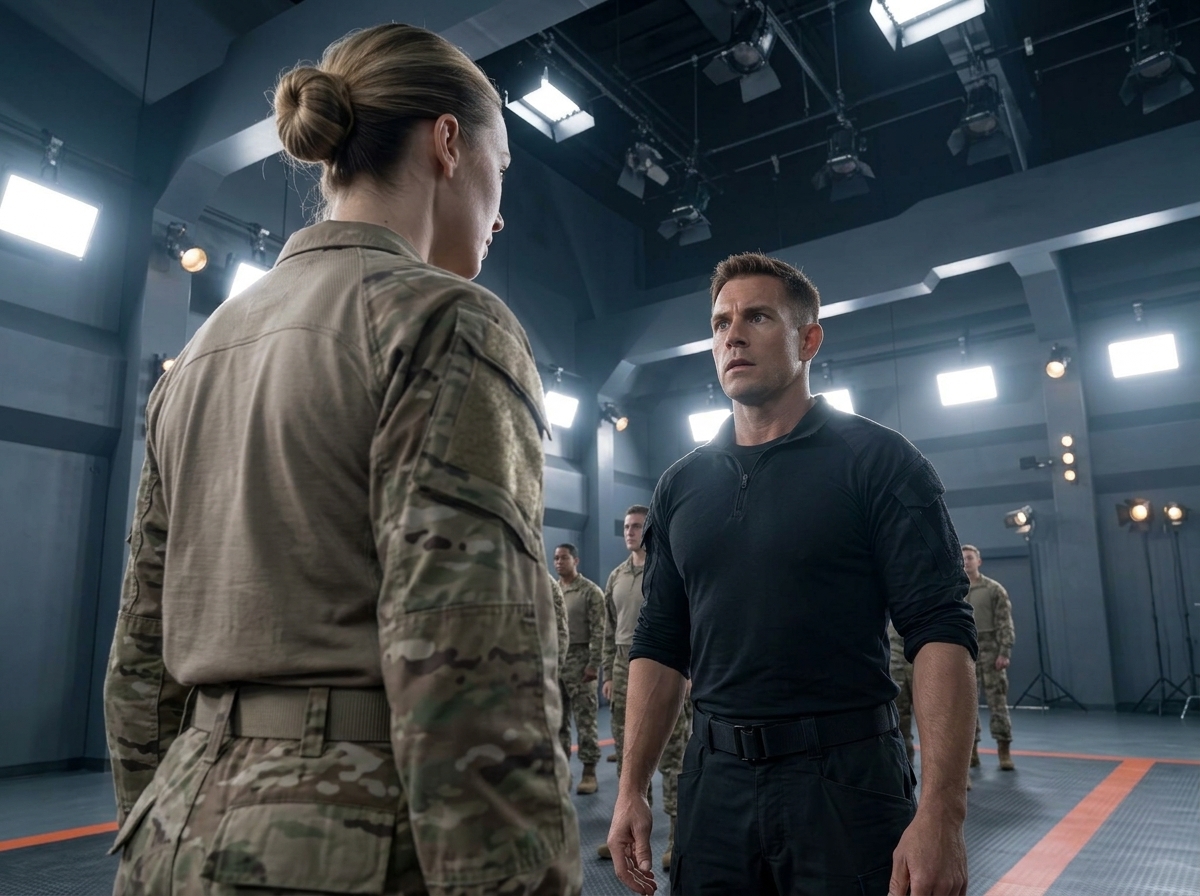
I stepped out of the chamber.
"Leverage," I said. "Timing. Structural interruption."
I did not raise my voice. I did not need to. The chamber behind me and the sensor board above us were doing the work that volume would have done less accurately.
Somewhere in the trainee line, a voice said, "She dropped him in half a second." The voice was careful and quiet, the voice of someone reporting an observation rather than making a comment, because the room had become the kind of room where careful and quiet was the only register that felt proportionate.
Kane stood with the tablet still in his hand, the same tablet he had driven against my sternum twenty minutes earlier, and his posture was no longer the posture of a man who owned the floor. It was the posture of a man who has just realized he has been performing ownership over something he did not, in fact, own.
From the observation deck above, Colonel Pike unfolded his arms.
May you like



"Continue the run," he said.
He was not looking at Kane when he said it.